Are Online Casinos Taxable in Germany? A Player’s Guide
📅 May 24, 2026 · ✍ Paul
Germany’s online gambling market underwent a significant transformation following the Fourth Interstate Treaty on Gambling in 2021, which legalized and regulated online casinos, poker, and sports betting. With this shift came a complex taxation landscape that affects both operators and players differently. Understanding whether online casinos are taxable in Germany requires distinguishing between casual play and professional gaming, as well as recognizing how operators bear the primary tax burden. For players seeking clarity before spinning the reels, this guide clarifies what you need to know about taxes and your gaming winnings.
Good News for Casual Players: Winnings Are Generally Tax-Free
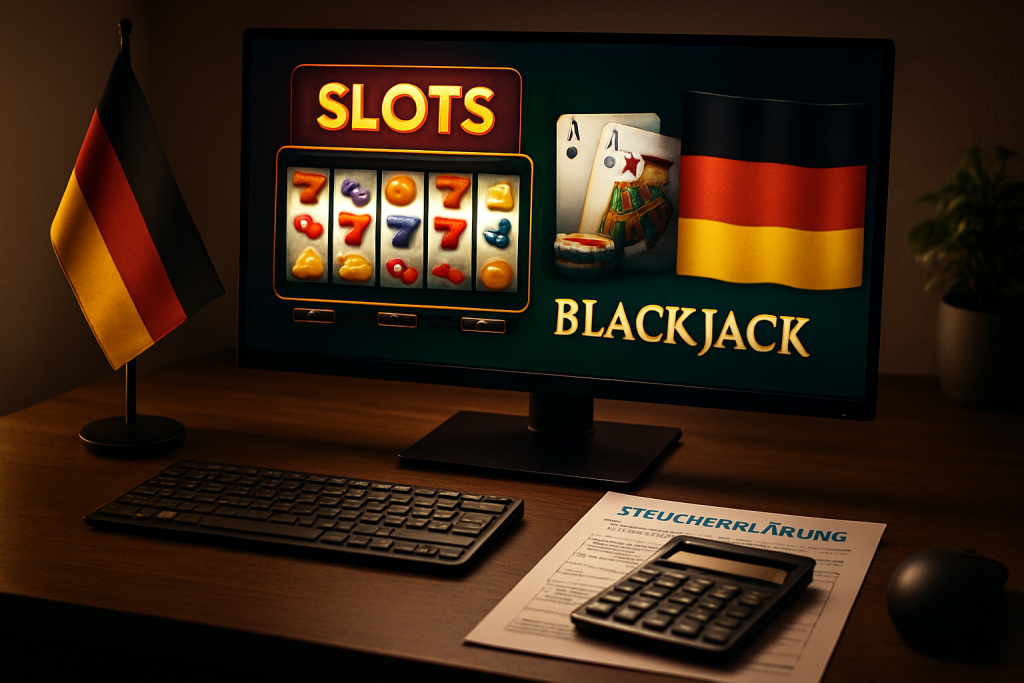
Gambling winnings are generally tax-free in Germany for most recreational gamblers. Germany takes a different approach than many countries by not taxing gambling winnings as personal income, as long as you’re playing for entertainment. So if you join a casino online after work, place a weekend sports bet, or enjoy a few slot sessions when you have some free time and happen to win big, those winnings are yours to keep without reporting them on your tax return.
For the vast majority of casual players in Germany, gambling winnings remain tax-free, and there is no need to report them. That freedom removes unnecessary stress from something meant to be enjoyable. This treatment applies to slots, online poker, and live dealer games played strictly as leisure activities.
The Professional Gambler Exception: When Winnings Become Taxable
There is one critical exception to the tax-free status. If gambling becomes your profession, the state may view your winnings as income that must be taxed. The German Federal Tax Court has declared that playing poker professionally can indeed be classified as a commercial activity and therefore be subject to taxation, building on an earlier stance from 2023.
A case involved a German player who, between 2008 and 2013, dedicated an average of 25 hours per week to online poker, amassing winnings totalling several hundred thousand euros. What began as a leisure activity gradually evolved into a structured and lucrative pursuit, with regularity and organisation eventually catching the eye of German tax authorities. If gambling is more than entertainment and starts looking like a business, then taxes could apply, including income tax and possibly trade tax.
Operator-Level Taxation: Where the Real Tax Burden Sits
Germany places the tax burden mostly on operators rather than players. For certain products like sports betting or virtual slot games, taxes are applied to stakes or operator revenue, not the player’s payout. That cost is already integrated into the odds and RTP, meaning the casino handles their tax obligations while you, the player, enjoy a straightforward payout.
A 5.3% tax is levied on all stakes in sports betting, virtual slots, and online poker. However, while sports betting, virtual slot games, online poker and lotteries are exempt from VAT so that a one-off taxation in Germany is ensured, online casino games will remain subject to VAT. A tax of 5.3 per cent is levied on player stakes, with an effective tax rate on the whole payment of the player being 5.03 per cent.
Licensing Requirements and Regulatory Compliance
The legalisation of online gambling through the Fourth Interstate Treaty on Gambling in 2021 brought regulated online casinos, poker, and sports betting under a tightly controlled licensing system. The Gemeinsame Glücksspielbehörde der Länder (GGL), fully operational since 2023, is the central federal gambling authority responsible for issuing licences and enforcing compliance nationwide.
Operators, including international ones, must meet demanding criteria such as demonstrating financial stability with a minimum €5 million security deposit, proving expertise, maintaining a physical office in the EU, and implementing robust responsible gambling and Anti-Money Laundering measures. Playing only on licensed platforms ensures operator transparency and your legal protection.
Unlicensed Operators and Player Rights
Operating without a legal license in Germany presents serious risks for online gambling operators. In addition to fines and potential criminal charges, operators face growing player lawsuits seeking reimbursement of gambling losses. Under Section 134 of the German Civil Code, contracts with unlicensed operators are deemed void, making it legally possible for players to claim refunds. Courts have increasingly ruled in favor of players, compelling unlicensed operators to repay substantial amounts.
❓ Frequently Asked Questions
Do I have to report my casino winnings to the German tax office?
No, not if you’re a casual player. Gambling winnings from online casinos, slots, and poker remain tax-free for recreational players in Germany and do not need to be reported to the tax office. However, if you gamble professionally with consistency, high frequency, and profit orientation, the tax authorities may classify it as commercial activity, requiring you to report income.
What is the difference between casual and professional gambling for tax purposes?
Casual gambling is treated as entertainment, and winnings are tax-free. Professional gambling involves regularity, dedicated time commitment, skill application, and profit motive. The German Federal Tax Court considers factors like weekly hours spent gambling, organized approach, and substantial winnings to determine if it qualifies as a business activity subject to income and trade taxes.
Why do online casinos deduct taxes from my winnings?
Online casinos don’t deduct taxes directly from your winnings. Instead, licensed operators in Germany pay a 5.3% turnover tax on stakes (for slots and poker) or VAT on online casino games. These taxes are built into the platform’s operational costs and odds, ensuring you receive your full winnings without additional deductions.
Can I lose my tax-free status if I win a large jackpot?
A single large win does not make you a professional gambler. Tax-free status depends on the pattern and nature of your activity, not the size of one payout. As long as you play casually and don’t demonstrate professional characteristics like daily play, complex strategies, or business-like organization, your winnings remain tax-free regardless of jackpot size.