Which German Online Casinos Are Licensed? 2026 Guide
📅 May 27, 2026 · ✍ Paul
Germany’s online gambling framework has tightened significantly since the Fourth Interstate Treaty on Gambling came into force in July 2021. Today, only operators holding a license from the Gemeinsame Glücksspielbehörde der Länder (GGL, the Joint Gambling Authority) can legally offer virtual slots and online poker nationwide. Understanding which casinos meet these standards matters because licensed platforms enforce strict player-protection mechanisms: deposit limits, KYC verification, and mandatory LUGAS integration. Whether you’re a casual slot enthusiast or a high-roller seeking poker action, knowing the difference between GGL-licensed and offshore options shapes your gaming experience fundamentally.
The GGL Licensing System: Germany’s Regulatory Authority
The GGL stands as the sole body authorized to issue licenses for online gambling in Germany. Established under the GlüStV 2021 framework, it oversees virtual slots, online poker, and sports betting across all 16 federal states with uniform rules. Operators securing a GGL license demonstrate compliance with anti-money laundering protocols, Know Your Customer (KYC) requirements, and player-protection standards. These five-year licenses are not handed out freely—applicants face rigorous fit-and-proper assessments, financial audits, and technical security reviews.
The GGL maintains a public registry of licensed operators, which German players can verify before depositing. However, online table games like roulette and blackjack remain regulated at the state level, meaning certain states maintain monopolies while others grant limited licenses to private operators. Schleswig-Holstein and North Rhine-Westphalia, for instance, have opened their markets to a small number of private casino operators.
Identifying GGL-Licensed Casinos: What to Look For
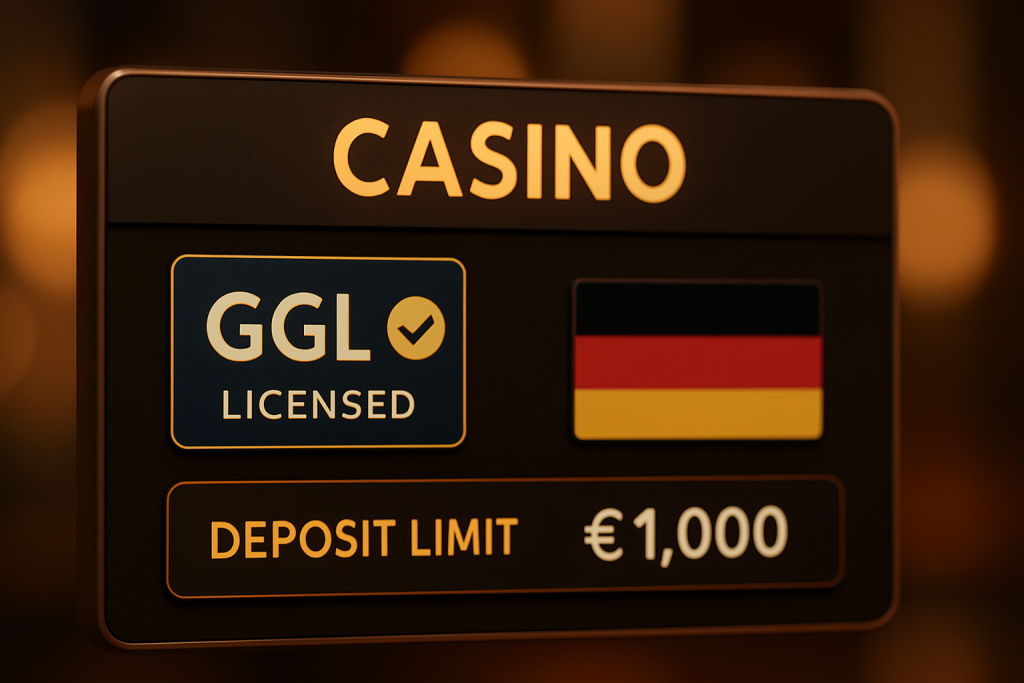
A genuine GGL-licensed casino displays its license number prominently on the website’s footer or terms page. German players should always cross-reference this information against the official GGL website to verify legitimacy. Licensed operators integrate with LUGAS, the national deposit-limit tracking system, ensuring your €1,000 monthly cap is respected across all platforms simultaneously. They also connect to OASIS, the player self-exclusion database, allowing you to opt out nationwide with a single request.
Look for casinos offering the restricted slot experience that signals GGL compliance: slots with €1 maximum stake, mandatory five-second delays between spins, and absence of progressive jackpots. These constraints may feel limiting compared to offshore platforms, but they reflect Germany’s commitment to responsible gambling. Additionally, all GGL-licensed sites display real-time deposit history, playtime metrics, and loss statements within player accounts—transparency that separates compliant operators from rogue actors.
GGL Regulations: Strict Rules Designed for Player Safety
Germany’s licensing conditions prioritize player protection with mechanisms rarely seen elsewhere in Europe. The €1,000 monthly deposit cap applies cross-platform, preventing you from circumventing limits by jumping between casinos. Operators must employ dedicated player protection officers trained to detect addictive behavior patterns and intervene proactively. Advertising restrictions are equally severe—no virtual slot ads between 6 AM and 9 PM, no celebrity endorsements, and zero promises of easy wins or wealth.
Account verification must complete within 72 hours of registration, requiring valid ID (passport, national ID, or residence permit) plus proof of address. Players must be at least 18 nationwide, though Bavaria, Lower Saxony, and Baden-Württemberg impose a 21+ minimum. Crucially, casual players pay no income tax on winnings at licensed casinos; the operator handles gambling-stakes tax instead. This advantage disappears if gambling becomes your primary income source, triggering standard tax obligations.
GGL vs. Offshore Casinos: The Trade-Off
Offshore casinos licensed by Curaçao, Malta, or PAGCOR operate outside Germany’s regulatory framework. These platforms typically offer higher deposit limits, progressive jackpots, unrestricted RTP rates, and looser bonus terms—making them appealing to high-rollers frustrated by GGL restrictions. Yet they exist in a legal gray zone: EU law permits German players to access them without penalty, but they dodge German taxes and fall outside national player-protection systems. Your LUGAS cap and OASIS self-exclusion carry no weight at offshore sites.
The security calculus differs too. GGL-licensed operators undergo annual compliance audits, maintain segregated player funds, and operate under stringent anti-money-laundering oversight. Offshore platforms, while often legitimate, answer to foreign regulators with varying enforcement rigor. For players valuing peace of mind over maximum flexibility, GGL licensing represents a safer compromise—fewer games, tighter spending caps, but transparent oversight and tax clarity.
Finding Licensed Operators: Where to Start Your Search
Begin at the official GGL website, where you’ll find the authoritative list of licensed online casinos and sports betting operators. This registry updates quarterly and includes license expiration dates, helping you spot rejuvenated platforms or newly approved entrants. Most GGL-licensed casinos carry well-known software providers like Play’n GO, Pragmatic Play, and Yggdrasil Gaming, whose games undergo GGL approval and testing by accredited labs.
Reputable casino comparison sites like Gambl.com, Casinofy.com, and Nightrush.com independently rank German casinos based on game variety, bonus transparency, customer support, and withdrawal speed. These platforms vet each operator’s license status, payment security (SSL encryption), and fairness certifications (RNG audits). Reading player reviews on gambling forums highlights real experiences with customer service responsiveness and payout reliability—criteria as important as licensing itself.
❓ Frequently Asked Questions
Are all German online casinos required to hold a GGL license?
GGL licenses cover virtual slots, online poker, and sports betting nationwide. However, online table games like roulette and blackjack fall under state-level regulation—some states maintain monopolies while others issue limited private licenses. Operators offering only state-specific table games may not appear on the GGL registry. To stay fully compliant, use GGL-registered casinos for slots and poker, then verify state-specific licensing separately for table game providers.
What happens if I play at an unlicensed online casino in Germany?
German players face no legal penalties under EU law for accessing offshore casinos, as the courts recognize EU freedom-of-services principles. However, unlicensed operators don’t contribute to German tax revenue, meaning winnings aren’t subject to the operator’s 5.3% stakes tax—but your LUGAS deposit limits and OASIS self-exclusion tools won’t apply. If disputes arise, you’ll lack recourse through German regulators. The trade-off: freedom from restrictions versus security and oversight.
Can I verify a casino’s GGL license instantly?
Yes. Visit the GGL website’s official operator registry and search by casino name or license number. The registry shows license type (slots, poker, sports betting), issue date, expiration date, and regulatory status. Cross-referencing takes seconds and reveals whether a casino’s claimed license is current or expired. Legitimate casinos display their license number visibly on the homepage or footer, making verification transparent.
Do GGL-licensed casinos offer competitive welcome bonuses compared to offshore sites?
GGL platforms typically offer more modest bonuses than offshore competitors—usually 100-200% match on first deposits with 35-40x wagering requirements. Offshore sites frequently match 300%+ with lower wagers, but lack German regulatory protections. GGL bonuses prioritize sustainable play over flashy promotions, reflecting stricter advertising rules. If you value bonus size over peace of mind, offshore casinos deliver more aggressive offers; for balanced value with regulation, GGL sites suffice.